
This cool season lawn care guide covers everything you need to keep Kentucky bluegrass, tall fescue, and perennial ryegrass healthy year-round. Cool-season grasses grow best in spring and fall- so timing your care tasks correctly makes all the difference.
Cool Season Lawn Care Schedule by Month
Here is your full-year roadmap for cool-season grass- what to do each month, in order.
Spring Lawn Care (March – May)
March: Rake out debris and dead grass to improve airflow and break up any snow mold. Run a soil test if you have not done one in the past three to four years- most cool-season lawns perform best at a pH of 6.0–7.0. Stay off the lawn if the soil is still frozen or thawing; foot traffic on frozen turf causes compaction damage that shows up once the grass greens up.
April: Begin mowing at 3–3.5 inches once the grass is growing consistently. Never remove more than one-third of the blade per cut. Apply your pre-emergent herbicide before soil temperatures reach 55°F to block crabgrass. Keep fertilization light this month- 0.75 to 1 lb of nitrogen per 1,000 sq ft. According to MSU Extension, lawns mowed at 3.5 to 4 inches out-compete weeds and build a larger, more stress-tolerant root mass- one of the simplest things you can do for a healthier lawn.
May: Spot-treat broadleaf weeds while temperatures stay below 85°F- this is your last comfortable herbicide window before summer. Raise the mowing height to 3.5–4 inches to shade the soil and slow weed germination. If you have had grub problems before, apply a preventive grub control product this month.
Summer Lawn Care (June – August)
June: Water 1 inch per week, deeply and infrequently. Water before 8 AM to reduce overnight moisture on blades, which triggers disease. Keep mowing at 3.5–4 inches- never cut short during summer heat. Watch tall fescue closely for brown patch fungus. For help with timing, see our guide on when to apply fungicide to your lawn.
July: Reduce foot traffic on stressed turf. Do not fertilize- nitrogen on heat-stressed grass causes more harm than good. If the lawn goes dormant and turns brown, apply half an inch of water every two to three weeks to keep the crowns alive without forcing growth.
August: Wait until late August when temperatures ease, then apply a slow-release fertilizer to start rebuilding reserves for fall. Continue monitoring for fungal disease until nighttime temperatures drop consistently below 70°F.
Fall Lawn Care (September – November)
September. This is the most important month of the year for cool season grass. Soil temperatures are back in the ideal 50–65°F range- perfect for root growth and seed germination. Aerate to relieve compaction, then overseed to fill thin areas. For timing details, read our guide on when is the best time to aerate your lawn. Apply your heaviest fertilization of the year: 1 to 1.5 lb of nitrogen per 1,000 sq ft. Cool season grasses peak in growth at 65–75°F, so fall feeding directly fuels recovery at exactly the right time.
October: Keep new seedlings consistently moist until they are established. Hold off on weed control until the new grass has been mowed two to three times. Once established, apply a post-emergent herbicide for any winter annual weeds.
November: Give your lawn a final mow. Apply a winterizer fertilizer if your fall feeding was light. Rake or mulch leaves before they mat down and smother the turf over winter.
Winter Lawn Care (December – February)
December: Stay off frozen turf- foot traffic on dormant grass leaves damage that appears in spring. Use de-icing salts carefully near lawn edges; salt buildup in soil harms grass roots.
January – February: Run a soil test now if you skipped fall. Plan to flush any salt-damaged areas with water once the soil thaws. Sharpen your mower blade and service your equipment so you are ready when spring growth begins.
Common Cool-Season Lawn Problems and Fixes
Brown Patch Fungus
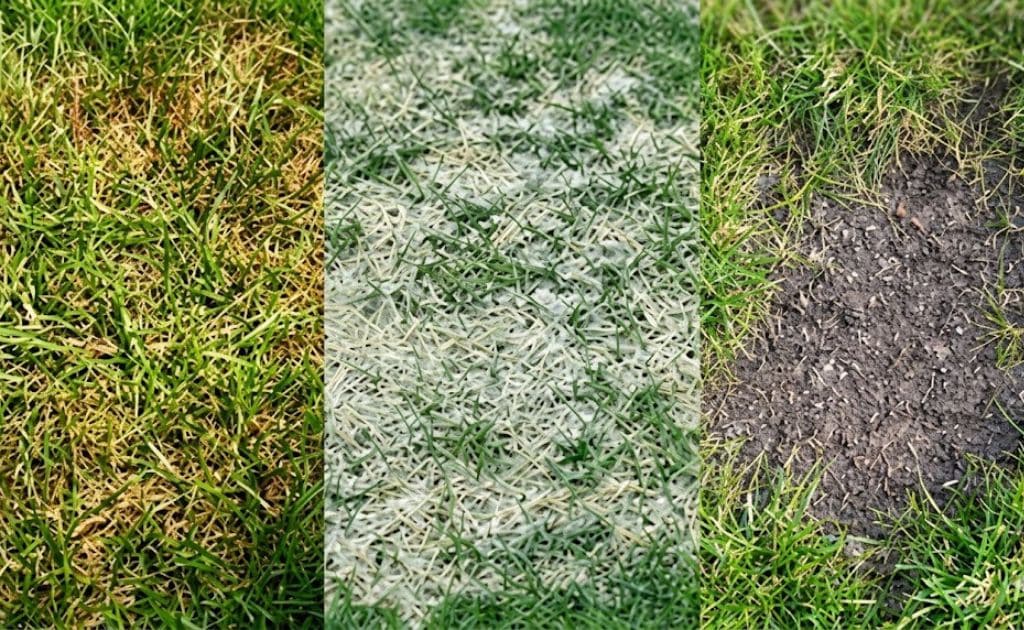
Brown patch shows up as circular brown patches on tall fescue during hot, humid nights above 70°F. It spreads fast when moisture sits on blades overnight. Prevent it by watering in the early morning, avoiding excess nitrogen in summer, and applying a preventive fungicide in late spring before conditions turn hot and humid.
Snow Mold
Snow mold appears as gray or pink circular patches after the snow melts. Prevent it by avoiding heavy late-fall nitrogen applications, mowing at a normal height before the first snowfall, and raking the lawn in early spring to improve airflow and release trapped moisture.
Bare Spots
Bare spots are usually caused by foot traffic, pet damage, or salt. Fix them by overseeding in early fall- scratch the soil surface first to get good seed-to-soil contact, then keep the area moist until the grass establishes.
Final Thoughts
With cool-season grass, timing is everything. Follow this schedule season by season, and your lawn stays thick and healthy year-round. Skip the key windows- especially fall aeration and overseeding- and you will spend the next season trying to catch up. Stay consistent, and the results will show.
