
Knowing when is the best time to aerate your lawn can be the difference between thick, healthy grass and a patchy, struggling yard. Compacted soil quietly blocks water, oxygen, and nutrients from ever reaching your grass roots.
Lawn aeration breaks up that compaction and gives your grass the room it needs to grow strong. But if you aerate at the wrong time, you stress your lawn instead of saving it.
In this guide, you’ll learn the right aeration timing by grass type, soil condition, and season- so every pass of the aerator actually counts.
What Is Lawn Aeration?
Lawn aeration is the process of removing small plugs of soil from your lawn to loosen compacted soil. This opens up space for water, air, and nutrients to reach deep into the root zone. A machine called a core aerator does most of the heavy lifting here.
Timing matters more than most homeowners realize. Aerate during your grass’s active growing season, and it recovers fast and grows stronger. Aerate at the wrong time, and your lawn struggles to bounce back at all.
That’s why knowing when to aerate your lawn isn’t just helpful- it’s the whole game.
Best Time to Aerate Your Lawn by Grass Type
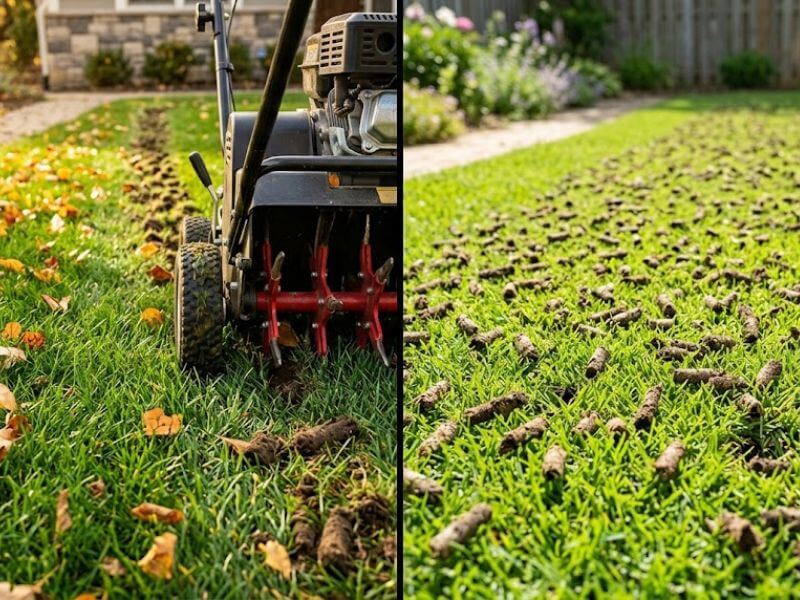
Not every lawn follows the same schedule. The best time to aerate your lawn depends almost entirely on your grass type. Aerate with your grass’s natural growth cycle, and you’ll see faster recovery and thicker turf.
Here’s exactly what that looks like for each type.
Cool-Season Grasses- Aerate in Fall
If you grow cool-season grass, early fall is your best window. Aim for late August through October to hit peak timing.
This covers grasses like Kentucky Bluegrass, Tall Fescue, and Perennial Ryegrass. These grasses push their strongest root growth in cooler temperatures. So aerating in the fall gives them the perfect conditions to recover and spread fast.
Three reasons fall aeration works so well for cool-season lawns:
- Soil temperatures stay warm enough to support root activity
- Cooler air temperatures reduce stress on the grass
- Weed pressure drops, so new grass fills in without competition
Avoid aerating cool-season grasses in summer. The heat slows recovery and puts your lawn under unnecessary stress.
Warm-Season Grasses- Aerate in Late Spring
If you grow warm-season grass, wait until late spring to aerate. The best window runs from late May through June.
This timing works for grasses like Bermuda, Zoysia, St. Augustine, and Centipede grass. By late spring, these grasses fully exit winter dormancy and enter their peak growing phase. That means your lawn recovers quickly and fills in strongly after aeration.
Three reasons late spring aeration works best for warm-season lawns:
- Grass exits dormancy and actively pushes new growth
- Soil moisture levels are easier to manage
- Warm soil temperatures speed up recovery after core aeration
Don’t aerate warm-season grasses in fall or winter. You’ll hit them right as they slow down- and recovery becomes a real problem.
Now that you know the best time by grass type, let’s look at the key timing rules that apply to every lawn- no matter what grass you grow.
When Should You Aerate Your Lawn? (Key Timing Rules)
Getting the season right is a great start. But a few simple rules make the real difference.
✅ Aerate when the soil is moist- not dry, not waterlogged. Water your lawn one to two days before aerating. Dry soil is too hard to penetrate. Wet soil turns into a muddy mess.
✅ Aerate only when your grass is actively growing. Your lawn needs strength to recover. Check your active growing season before you schedule anything. Aerate outside that window, and recovery slows to a crawl.
✅ Skip aeration during extreme heat or drought. Your grass is already struggling. Aerating during heat or dry spells only adds more stress.
✅ Never aerate a dormant or newly seeded lawn. A dormant lawn cannot heal. A new lawn needs time to establish first. Give them both the time they need.
Now you know when to aerate- and when to stop. Next, let’s cover how often your lawn actually needs it.
How Often Should You Aerate Your Lawn?
Most lawns don’t need aeration every year. Your soil type and foot traffic level decide the frequency.
Heavy clay soil or high foot traffic? Aerate once a year. These lawns compact fast and need regular relief.
Sandy soil or low traffic? Aerate every two years. These lawns stay loose and drain well on their own.
Not sure where your lawn falls? This quick table makes it simple:
| Soil Type / Condition | Recommended Frequency |
| Heavy clay soil | Once a year |
| High foot traffic areas | Once a year |
| Sandy soil | Every 2 years |
| Healthy, loose soil | Every 2 years |
| Compacted or problem lawn | Once a year |
Now that you know how often to aerate, let’s look at the warning signs that tell you your lawn is ready right now.
Top Signs Your Lawn Needs Aeration Now
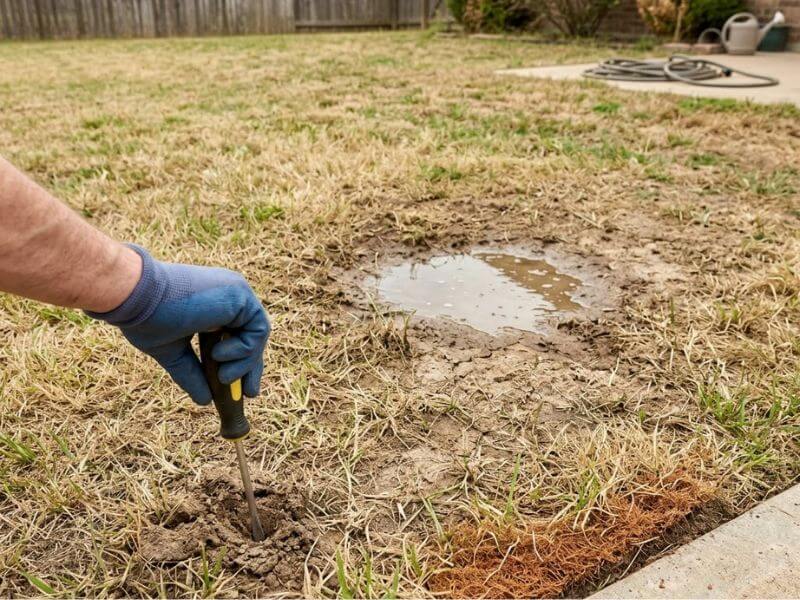
Your lawn tells you when it needs help. Watch for these signs:
- Water pools on the surface or runs off instead of soaking in
- Soil feels rock hard when you push a screwdriver into the ground
- Grass looks thin, patchy, or discolored in multiple spots
- Thatch buildup exceeds half an inch across your lawn
- High foot traffic areas feel noticeably harder than the rest of your yard
Spot one or more of these? Your lawn is ready for aeration now.
When NOT to Aerate Your Lawn
Timing aeration wrong can hurt more than help. Avoid aerating in these situations:
- Summer heat or drought- your grass is already stressed and cannot recover fast enough
- Right after heavy rain- waterlogged soil clogs the aerator and tears up your lawn
- Winter dormancy- your grass is sleeping and has no energy to heal
- Within the first year of a new lawn- young grass roots need time to establish before any disruption
When in doubt, wait. Aerating at the right time always beats aerating at the wrong time.
Conclusion
Knowing when is the best time to aerate your lawn puts you ahead of most homeowners. Cool-season grasses thrive with fall aeration. Warm-season grasses respond best to late spring aeration. Match your timing to your grass type and soil condition– and your lawn will show the difference fast.
Ready to take the next step? Grab your aerator, pick the right window, and give your lawn exactly what it needs.
