
Brown patches, white spots, or thinning grass can indicate a fungal disease in your lawn. Catching it early saves your lawn. Knowing when to apply fungicide to lawn areas makes all the difference.
Lawn fungus spreads fast in warm, humid weather. Many homeowners miss the early signs and apply treatment too late. The right timing protects your grass before the damage gets worse.
In this guide, you will learn the best time to apply fungicide, how often to treat your lawn, and how to apply it correctly. Whether you need preventative or curative fungicide, this guide covers everything you need.
Let’s start by learning how to tell your lawn actually needs fungicide.
How to Tell Your Lawn Needs Fungicide
Your lawn sends clear warning signs before fungus takes over. Learning these signs helps you act fast.
Healthy grass does not show sudden color changes or unusual patterns. But fungal infections change that quickly.
Look for these problems before you apply any treatment:
- Circular or irregular patches of dead or discolored grass
- White, gray, or orange powdery coating on grass blades
- Slimy or wet-looking spots that do not dry out
- Thinning turf in areas that get little airflow
- Streaks or spots on individual grass blades
Do not confuse fungal disease with drought stress or nutrient deficiency. Drought stress creates uniform brown areas. Fungus creates patchy, irregular patterns.
Common Signs of Lawn Fungus
| Sign | What It Looks Like | Possible Disease |
| Circular brown patches | Round dead spots in turf | Brown patch disease |
| Orange or yellow powder | Dusty coating on blades | Rust fungus |
| White powdery coating | Chalky film on grass | Powdery mildew |
| Irregular gray patches | Wet, matted grass areas | Gray leaf spot |
| Pink or red threads | Thin red strands on blades | Red thread disease |
If you spot any of these signs, your lawn likely needs fungus control. Now let’s look at the best time to apply fungicide to your lawn.
Best Time to Apply Fungicide to Lawn
Timing your fungicide application correctly gives you the best results. Applying it at the wrong time wastes money and effort.
You need to understand two things- the right season and the right time of day.
Best Season to Apply
Spring and summer are the most important seasons for lawn fungicide treatment. Most fungal diseases thrive when temperatures range from 60°F to 85°F.
Apply preventative fungicide in early spring before humidity levels rise. This protects your lawn before fungus even starts growing.
Apply curative fungicide as soon as you spot disease symptoms. Do not wait for the problem to spread across your lawn.
Here is a simple seasonal guide:
| Season | Action |
| Early Spring | Apply preventative fungicide as temperatures warm up |
| Late Spring | Monitor the lawn closely for early fungal signs |
| Summer | Apply curative fungicide at the first sign of disease |
| Fall | Treat cool-season fungal diseases like snow mold |
| Winter | No fungicide needed in most regions |
Each season brings different lawn care approaches beyond just fungicide. Check our Month-by-Month Lawn Care Calendar to stay on top of every seasonal task for a healthy lawn.
Best Time of Day to Apply Fungicide to Lawn
The best time of day to apply fungicide to the lawn is early morning. Apply between 6 AM and 10 AM for the best results.
Here is why morning works best:
- Dew on grass blades helps the fungicide spread evenly
- Wind speeds stay low in the morning
- Temperatures stay cool, so the product does not evaporate fast
- Grass dries fully before evening, which reduces reinfection risk
Avoid applying fungicide in the afternoon heat. High temperatures break down the active ingredients too quickly. Never apply fungicide before heavy rain. Rain washes the product off before it works.
Now that you know the right timing, let’s talk about choosing the right type of fungicide.
Preventative vs. Curative Fungicide- Which One Do You Need?
Choosing the right approach saves time and money. Both options work, but they serve different purposes.
Preventative fungicide stops fungus before it starts. You apply it before any visible symptoms appear. This works best if your lawn has a history of fungal disease.
Curative fungicide treats active fungal infections. You apply it after you already see disease symptoms. It stops the disease from spreading further.
Here is a quick comparison:
| Type | When to Use | How It Works |
| Preventative | Before symptoms appear | Creates a protective barrier on the grass |
| Curative | After symptoms appear | Kills active fungal growth on contact |
Use a preventative fungicide if your lawn gets fungus every year. Use curative fungicide if you see sudden patches or discoloration appear.
One important fact- curative fungicide does not reverse existing damage. It only stops the disease from spreading. Dead grass areas will need reseeding after treatment.
Understanding which type you need makes choosing the right product much easier. Let’s look at the main types of fungicides available.
Types of Fungicide for Lawns
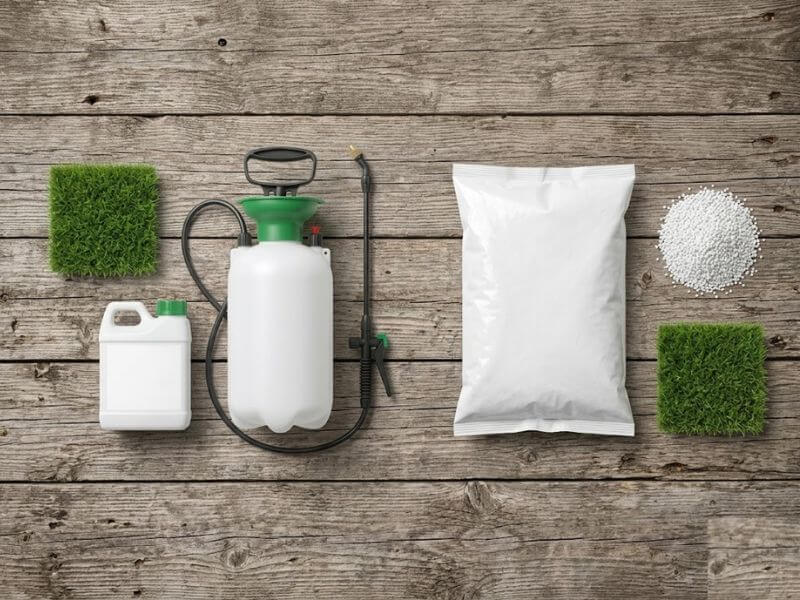
Not all fungicides work the same way. Choosing the right type makes your treatment more effective.
Two main types of fungicides work on lawn fungal diseases: contact fungicides and systemic fungicides.
Contact Fungicide
Contact fungicide stays on the surface of the grass blade. It kills fungal spores that touch the treated surface directly.
This type works fast but does not last long. Rain or irrigation washes it off quickly. You need to reapply it more frequently.
Contact fungicide works best for:
- Early-stage fungal infections
- Lawns with mild disease pressure
- Quick knockdown of visible fungal growth
Systemic Fungicide
Systemic fungicides absorb into the grass plant itself. It moves through the plant and kills fungus from the inside out.
This type provides longer residual protection. It stays active even after rain or irrigation. You do not need to reapply it as often.
Systemic fungicide works best for:
- Severe or recurring fungal infections
- Preventative treatment programs
- Deep-rooted fungal diseases like take-all root rot
For most homeowners, systemic fungicide delivers better long-term results. Now, let’s cover how to apply fungicide to your lawn the right way.
How to Apply Fungicide to Lawn Correctly
Applying fungicide the right way gets you the best results. Follow these simple steps:
- Mow your lawn one day before applying fungicide
- Choose the right product for your specific lawn disease
- Mix the product exactly as the label directs
- Apply in the early morning on a calm, dry day
- Use a pump sprayer or hose-end sprayer for even coverage
- Water lightly after applying the granular fungicide to activate it
- Keep pets and people off the lawn until it fully dries
Never apply fungicide before rain. Rain washes the product off before it works.
Conclusion
Lawn fungus moves fast, but the right treatment stops it. Knowing when to apply fungicide to your lawn gives you a real advantage over disease.
Apply preventative fungicide in early spring before problems start. Use curative fungicide the moment you spot symptoms. Always apply in the early morning for the best results.
Stick to the recommended application schedule and rotate your products to avoid fungicide resistance. Follow the label every single time.
A healthy, fungus-free lawn starts with the right timing and the right product. For a complete breakdown of what your lawn needs every season, check our seasonal lawn care checklist to keep your grass healthy all year long.
