
Knowing the signs of army worms in lawn early can save your grass before serious damage starts. Army worms can destroy your lawn in just a few days. These destructive pests move fast and leave dead patches behind.
You may notice brown spots appearing overnight. Your grass may look ragged or completely bare in some areas. These are classic signs of armyworms in your lawn.
Many homeowners miss the early warning signs. By the time they notice, the lawn damage is already serious.
The good news? You can stop them.
This guide covers everything you need- how to spot army worms in your lawn, confirm an infestation, and how to get rid of army worms before they take over your yard completely.
Let’s start with the basics.
What Are Army Worms?
Army worms are the larvae of moths- not actual worms. The larval stage causes all the damage to your lawn.
They move across yards in large groups, eating everything in their path. That swarming behavior is exactly why people call them “army” worms.
Army worms in grass can destroy a full lawn in just two to three days.
Now let’s look at what they actually look like.
What Do Army Worms Look Like?
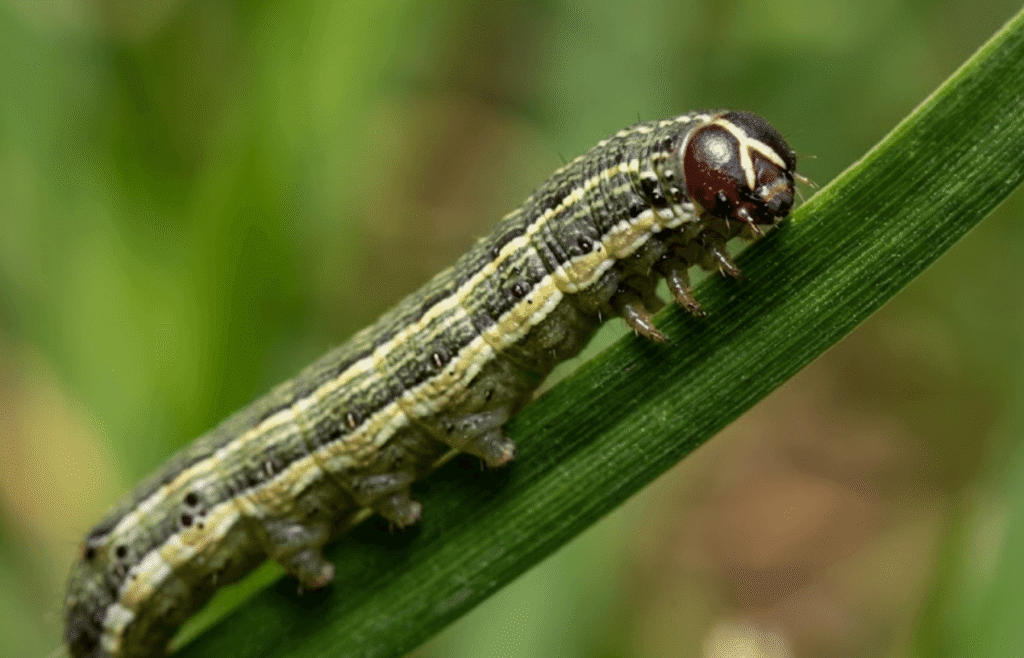
Armyworms grow between 1½ and 2 inches long. They have a soft, smooth body with green, yellow, brown, or black stripes running down their sides.
The easiest way to identify them? Look at the head. Army worms have a distinct inverted “Y” marking on their forehead. No other common lawn worm has this marking.
Their adult moth form looks different. The moth has dark gray front wings with light splotches and pale white hind wings.
Now that you know what they look like, let’s talk about the exact signs of army worms in your lawn.
Signs of Army Worms in Your Lawn
Catching the early warning signs saves your grass. Here is what to watch for.
Brown Patches Appearing Suddenly
Armyworms in your lawn eat fast. You may see irregular brown patches pop up overnight. These spots grow quickly if you ignore them.
Ragged or Chewed Grass Blades
Walk across your lawn and look closely. Armyworms chew grass blades from the edges. The grass looks torn, ragged, and uneven.
The “Windowpane” Look
Sometimes army worms only chew the green outer layer of the blade. This leaves a thin, transparent windowpane effect on your grass. The blade looks almost see-through.
Bare Spots on the Lawn
Heavy army worm infestations shear grass completely to the ground. These bare spots spread fast across your yard.
Birds, Skunks, or Rodents Digging in Your Lawn
This is an indirect but reliable sign. Starlings, skunks, and rodents actively dig into turf to eat armyworm larvae. Unusual animal activity on your lawn means something is underneath.
Spotting these signs early is great. But how do you actually confirm army worms are the problem? Let’s find out next.
How to Get Rid of Army Worms
Acting fast is the key. Here are the best ways to eliminate army worms from your lawn.
Natural Methods
Natural options work well for light to moderate infestations.
Beneficial nematodes are microscopic organisms that attack armyworm larvae underground. Apply them to moist soil in the early morning or evening.
Neem oil disrupts the feeding and growth cycle of armyworms. Mix it with water and spray it directly over affected grass areas.
You can also encourage natural predators. Birds, parasitic wasps, and ground beetles actively hunt and eat armyworm larvae. Avoid pesticides that kill these helpful insects.
Chemical Treatments
For heavy infestations, chemical treatments work faster.
You have two main options:
Granular insecticides are spread evenly across your lawn using a lawn spreader. Water your lawn immediately after application. This pushes the active ingredients into the soil where larvae hide.
Liquid spray insecticides cover grass surfaces fast. They work best for above-ground armyworm activity.
Always apply treatments during early morning or late evening. Army worms feed most actively at these times, making treatments far more effective.
When to Call a Professional
Call a licensed pest control professional if:
- The infestation covers a large portion of your lawn
- Natural and chemical treatments show no results after a few days
- Army worms keep returning every season
Sometimes the damage goes beyond a simple fix. A professional brings commercial-grade insecticides and a targeted treatment plan to stop the problem fast. They also assess your lawn’s overall health and build a recovery strategy.
If army worm damage has left your lawn in rough shape, a proper lawn care maintenance plan helps your grass recover and stay strong against future attacks.
How to Prevent Army Worms from Returning
Getting rid of army worms is only half the battle. Keeping them away requires consistent lawn care habits.
Lawn Maintenance Habits That Reduce Risk
- Mow regularly to eliminate hiding spots for armyworm larvae
- Avoid overwatering- moist, thick turf attracts egg-laying moths
- Dethatch every season to expose and remove hidden larvae
- Fertilize properly to keep grass strong and resilient
Follow a proper seasonal lawn care routine to keep your lawn healthy year-round.
Monitoring Schedule
- Weekly- Check for brown patches or ragged grass blades
- After heavy rain- Inspect immediately, wet conditions trigger egg hatching
- Late summer to early fall- Stay extra alert during peak army worm season
Use this month-by-month lawn care calendar to stay ahead of seasonal pest activity all year long.
Conclusion
Army worms move fast and hit hard. But now you know exactly what to do.
You can spot the signs of armyworms in your lawn early. You can confirm the problem with a simple soap flush test. And you know how to get rid of army worms using both natural and chemical methods.
The faster you act, the less damage they cause.
Do not let army worms take over your yard. Start inspecting your lawn today and take action at the first sign of trouble.
